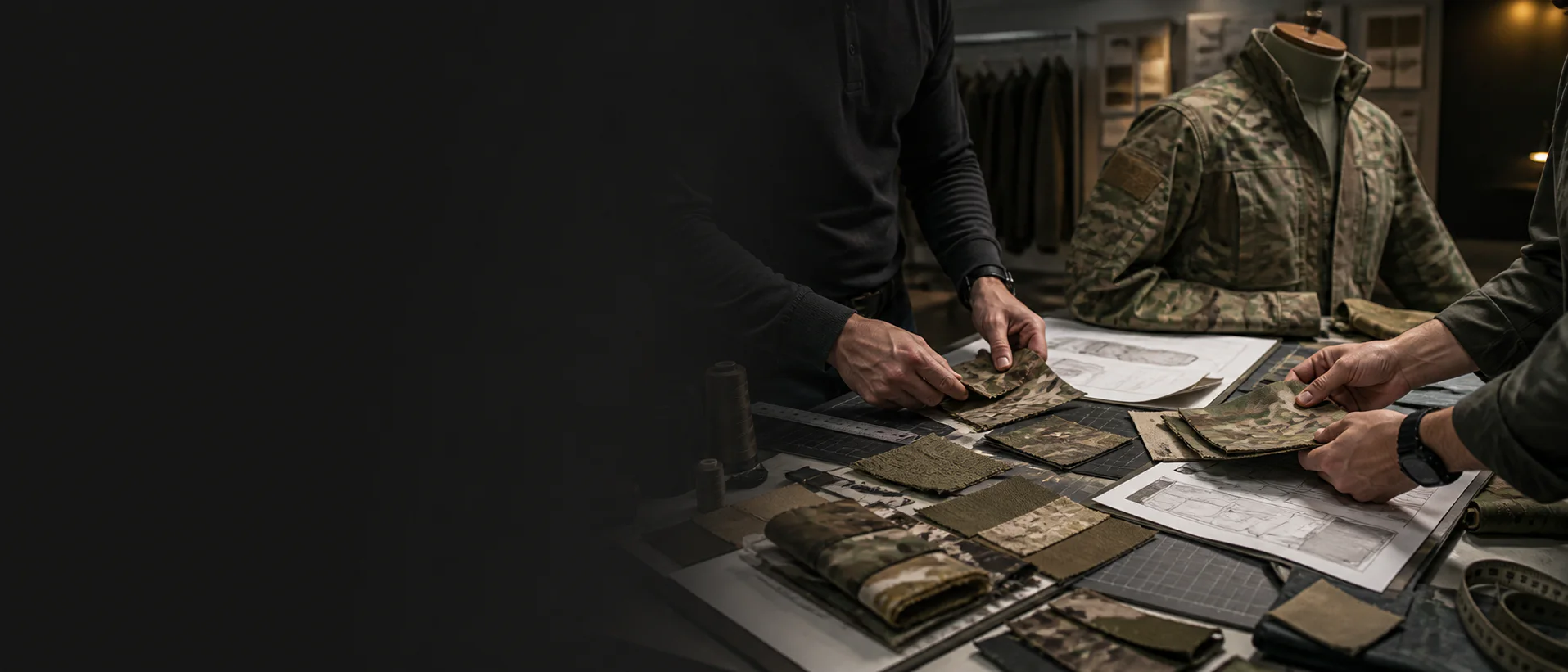
Collect use, design and size requirements
Specifications, samples, timing and deliverables are confirmed with your team as the project progresses.

Translate requirements into product samples, fit approval and bulk-production specifications.
Project support
Translate requirements into product samples, fit approval and bulk-production specifications. Share the product, quantity, specification, destination and timeline so our team can recommend the appropriate steps for sampling, quotation, production, inspection and delivery.
What to send us
A clear requirement helps us recommend suitable products, options and next steps.
Project process
Specifications, samples, timing and deliverables are confirmed with your team as the project progresses.
Specifications, samples, timing and deliverables are confirmed with your team as the project progresses.
Specifications, samples, timing and deliverables are confirmed with your team as the project progresses.
Specifications, samples, timing and deliverables are confirmed with your team as the project progresses.
Specifications, samples, timing and deliverables are confirmed with your team as the project progresses.
Project deliverables
Deliverables are matched to the product, specification, quantity, project stage and quotation scope.
The format, timing and included details are confirmed for your project.
The format, timing and included details are confirmed for your project.
The format, timing and included details are confirmed for your project.
The format, timing and included details are confirmed for your project.
Project planning
Sampling is useful only when the buyer knows what decision follows. A concept prototype can explore construction, an evaluation sample can test a proposed platform, a size set can verify fit coverage and a pre-production sample can freeze a production reference. Treating all of these as a free general sample creates ambiguous approval and leaves changes uncontrolled.
State whether the review concerns appearance, function, material, fit, identity, compatibility or production readiness. One sample may not represent every decision, especially when provisional materials or components are used.
Connect measurement tables and tolerances to the intended wearer population, garment layering and movement needs. Size labels alone do not demonstrate that the grading approach is suitable.
Name the person or committee permitted to comment and approve, the review deadline and the record that will distinguish accepted, conditional and rejected points.
What to send
Provide intended users, duty conditions, product drawings or reference sample, measurement table, material direction, colours, markings and mandatory interfaces.
Specify the requested sample type, quantity, representative and provisional elements, tests or wearer trials, acceptance questions and whether return or retention is required.
Use numbered comments tied to photographs, measurements or clauses; record requested correction, owner, date, revision and whether the point affects other sizes or components.
Preparation tips
A sample is requested for general checking, so reviewers comment on unrelated preferences and nobody knows what approval allows the project to do next.
Photographs, messages and spreadsheets circulate independently; corrections are made, but the accepted change set and governing revision cannot be reconstructed.
A middle size is accepted and assumed to validate all smaller and larger sizes without checking grading, layering, movement or high-risk measurement points.
Next step
Submit the organization, bulk quantity, intended users, current specification and the exact decision the sample must support. Identify what may be provisional and what must match production. The review should propose a sample type, reference pack, comment format and approval owner before development cost or timing is confirmed.
Capability FAQ
Review relevant project examples, sample quality, material and size controls, inspection records, current test or management-system documents, capacity assumptions and how corrective actions are closed. Match every performance claim to the exact quoted product.
Check the capability during supplier qualification and confirm it again if the product, production location, materials, process, destination or required standard changes. Ask for documents and samples that match the current order.
Share your organization, product use, quantity, current specification, destination, deadline and any required test method, inspection or document format.
The exact deliverables depend on your project. Typical items include a requirement list, specification, sample revision summary, size chart, BOM, inspection plan, packing plan or supporting-document list.
Schedule and capacity can be confirmed after we review the exact configuration, quantity, materials, sample stage and required production window.
Share the product, quantity, destination, customization and delivery requirements. Our business team will reply with suitable options and the next quotation step.
 WhatsApp