

BDU vs ACU-Style Uniforms: A Procurement Comparison
BDU vs ACU: compare jacket pockets, front closures, collars and camouflage terminology before choosing a uniform for bulk supply.
Use this guide to compare options, prepare clearer requirements and move confidently from product review to sampling and quotation.
Key takeaway
BDU means Battle Dress Uniform; ACU means Army Combat Uniform. Traditional BDU jackets use a button front and chest and lower-front pockets. ACU designs moved storage toward the chest and sleeves and introduced a zip front. Details changed between ACU versions, including collars and pocket fasteners. OCP means Operational Camouflage Pattern: it describes camouflage, not a third equivalent jacket design. For a commercial order, compare the actual offered garments, then select fabric, sizes and colours separately.
Product and supplier review
Apply the BDU / ACU-style comparison to actual catalogue options
Separate the uniform design family from the fabric and configuration you intend to buy. Use a jacket-and-trouser set when comparing a complete uniform, and a trouser reference when evaluating a replacement or mixed kit.
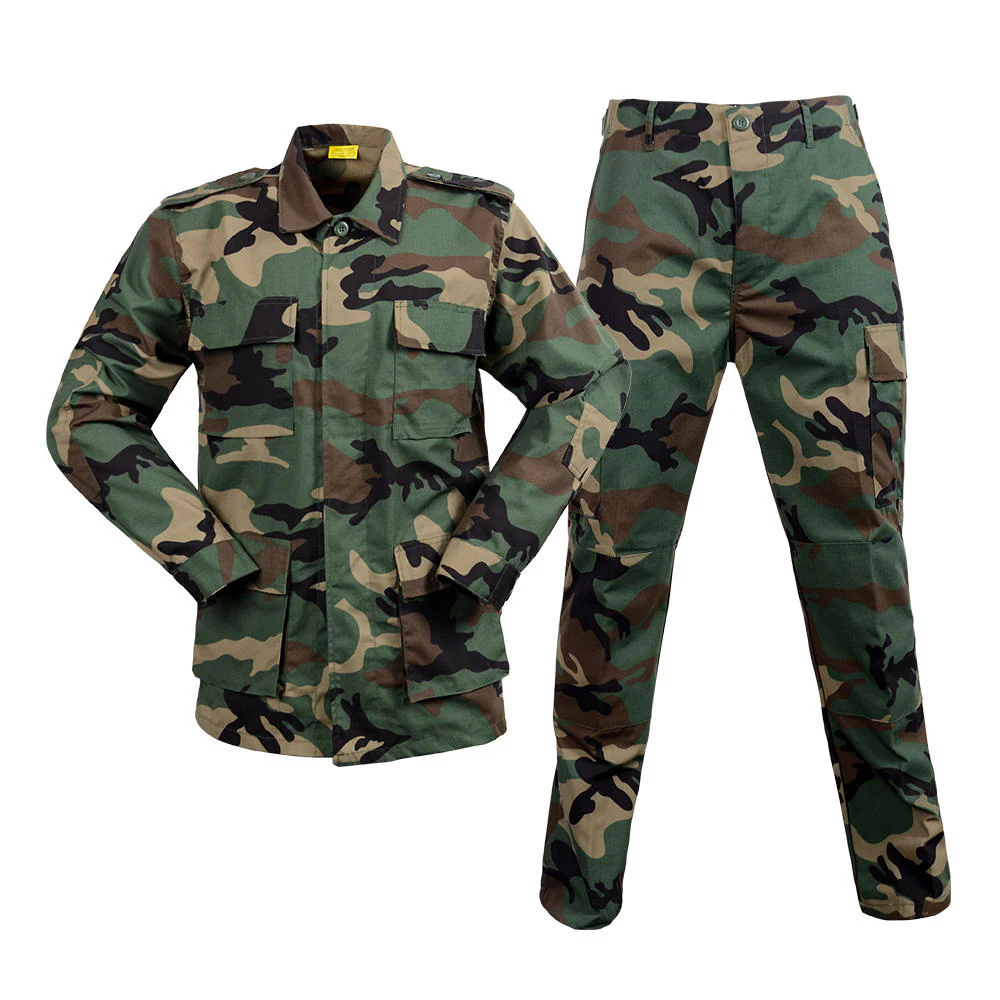
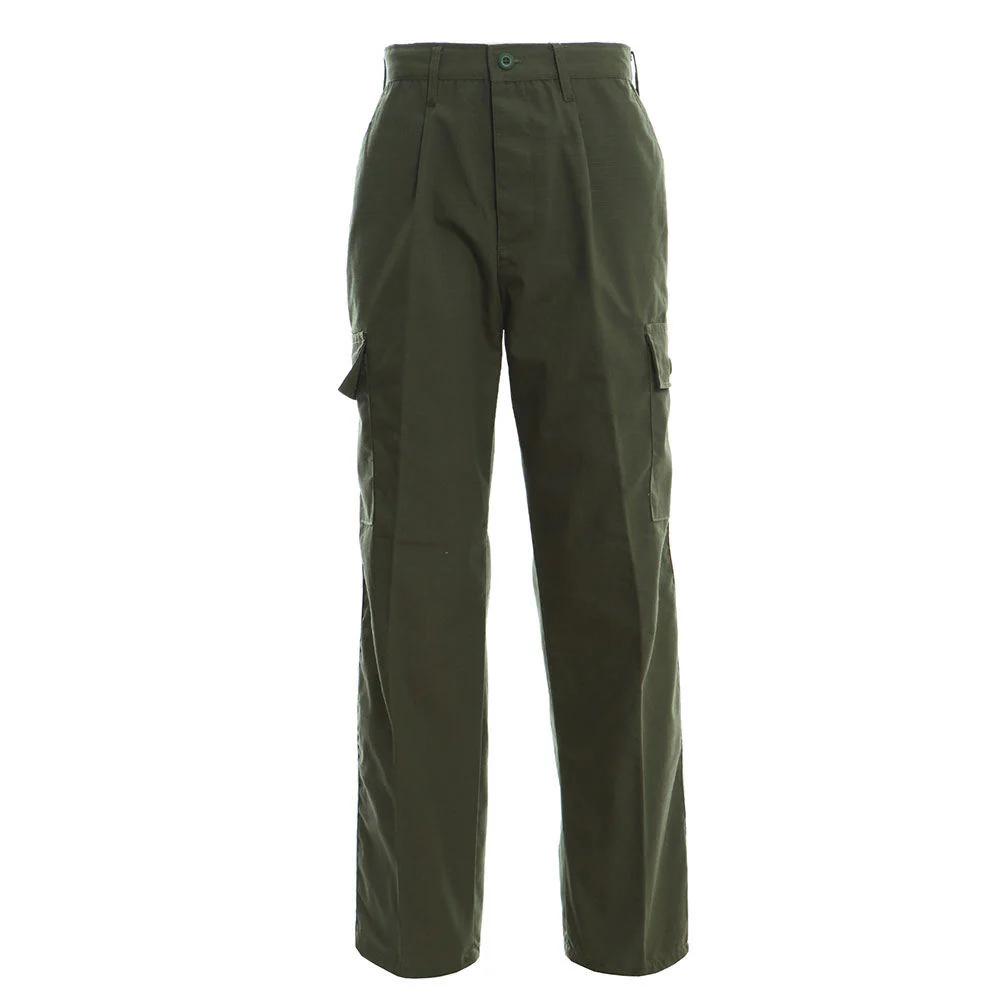
| Reference | Product-specific comparison | Sample decision |
|---|---|---|
| JT-BDU-008 · camouflage set | Its catalogue lists 65/35 polyester/cotton, 210–220 g/m² and XS–XXL. The reference photograph shows a conventional fold-down collar and flap-covered jacket pockets. | Confirm jacket closure, pocket access, finished measurements and the exact fabric on the selected sample. |
| JT-BP-006 · cargo trousers | The photograph shows trouser construction only. It cannot establish an ACU jacket configuration or a fabric specification. | Confirm waist/inseam grading, thigh-pocket position and compatibility with the proposed jacket. |
Neither a camouflage photograph nor a BDU/ACU-style label demonstrates approval as an official military uniform. Compare the exact garment and requested construction, rather than treating the name as a complete specification.
What the names do not define
Neither term fixes the fabric, camouflage, durability, size chart or exact construction.
- Fabric and finish
- Pocket and closure details
- Reinforcement zones
- Insignia fields
- Testing and tolerance
Select by duty profile
Use climate, equipment compatibility, movement, maintenance, identity and wearer feedback to choose the construction platform. A name alone does not prove suitability.
Avoid quotation mismatch
Issue a controlled drawing or requirement matrix, distinguish garment construction from camouflage artwork and record accepted deviations before sampling.
BDU and ACU-style comparison matrix
These historical design differences help you shortlist a style. Commercial versions vary; check the pictures and sample of the exact product you order.
| Feature | Traditional BDU jacket | ACU design family | What to compare on your sample |
|---|---|---|---|
| Front closure | Button-front construction | Zip-front construction with a covering flap | Ease of opening, replacement parts and the requested fastening method |
| Jacket pockets | Chest and lower-front pockets | Angled chest pockets and sleeve storage; details vary by version | Pocket placement, usable size and access while wearing your normal work equipment |
| Collar and fasteners | Conventional fold-down collar | Early ACUs used a mandarin collar; later designs changed the collar and pocket fasteners | The actual collar shape and button, zip or hook-and-loop details |
| Fabric and camouflage | The BDU name alone does not specify the fabric blend or pattern | ACU is the uniform designation; OCP is a camouflage pattern | Fibre content, fabric weight, colour reference and care instructions |
Boundary: The selected baseline remains incomplete until fabric, measurements, workmanship, inspection and packing are defined.
Use BDU and ACU-style as platform labels, not complete specifications
BDU and ACU-style are useful search and discussion terms because they point to recognizable families of field uniforms. They do not, by themselves, determine fabric, camouflage, pocket count, closure, reinforcement, grading, insignia or workmanship. Two suppliers can honestly use the same label for garments that differ at every one of those points. An institutional comparison should therefore begin by listing the visual and functional features the buyer associates with each term, then converting those expectations into a controlled requirement.
The practical question is not which acronym is universally better. It is which construction direction better supports the wearer’s duty, climate, equipment and identity rules. A buyer may retain the appearance of a BDU-style uniform while changing fabric and pockets, or select an ACU-style layout without adopting another organization’s exact garment. Naming the platform helps discovery; drawings, measurements, BOM and samples establish the actual deliverable. This distinction also prevents a familiar label from being mistaken for evidence of official issue or endorsement.
Compare the intended duty and equipment interface
Start with the actions performed while dressed: patrolling, training, driving, carrying loads, kneeling, administrative work or a mixture. Note whether body armour, a chest rig, backpack or duty belt covers parts of the garment. Pocket access that works in an unladen fitting may disappear under equipment. Collar height, sleeve volume, cuff adjustment and trouser waistband design can also affect layering and load carriage. A comparison worn with the intended equipment gives more useful evidence than a side-by-side catalogue image.
Climate changes the decision. Hot-weather programs may prioritize air exchange, drying and reduced bulk; cooler or abrasive conditions may justify heavier constructions or layering allowance. Neither platform name settles this balance. Describe the normal work-rest cycle, exposure and care conditions, then ask suppliers to explain the proposed fabric and construction. When different regions share a uniform identity, the buyer can approve seasonal material variants while controlling common artwork, colours and silhouette. These variants should be coded clearly so they are not mixed in packing or replenishment.
Compare shirt and coat construction point by point
Create a front, back and sleeve comparison. Record pocket position, opening direction, closure type, bellows or pleats, pen channels, elbow reinforcement, cuff adjustment, collar construction and any ventilation. Decide which features are mandatory because of equipment or duty, which express institutional identity and which may be supplier-proposed. A feature should earn its place through use; adding pockets and hook fields simply because they are associated with a style can increase weight, snag points and production complexity.
Check how the upper garment behaves across postures and layers. Shoulder and arm movement, back length and sleeve rotation can matter more than the visible pocket outline. If the garment will be tucked, worn over trousers or combined with a combat shirt, state that. Insignia locations need clearance from pockets, seams and equipment straps. During sample review, dimension critical locations rather than relying on visual approval. The resulting construction sheet should identify accepted deviations from any reference garment so repeat orders do not drift toward a different interpretation.
Compare trouser geometry and load placement
For trousers, examine rise, seat and thigh ease, knee position, cargo-pocket volume, waistband adjustment, belt-loop geometry, ankle adjustment and reinforcement. A lower or angled pocket may be easier to reach in one posture and obstructive in another. Knee reinforcement must align across the size range; a correctly placed patch on a middle size does not prove the grading. If pads or inserts are required, define their interface and whether they are included in the issued set.
Evaluate trousers with the intended belt, boots and carried items. Sit in a representative vehicle seat, kneel and climb if those actions reflect the duty. Record where the waistband rolls, pockets collide with equipment or hems interfere with footwear. Material panels may shrink or stretch differently from the main fabric, so any care or dimensional-stability requirement should apply to the assembled garment. A useful comparison explains why the selected arrangement supports the task instead of declaring one platform more tactical.
Compare fabric, finish and camouflage independently from style
Either platform can be made in different fibre blends, weights, weaves, finishes and solid colours or camouflage patterns. Keep this material decision separate from the construction comparison. Specify mandatory composition or performance only when the operating requirement supports it. If suppliers may propose alternatives, ask for a data sheet, sample and clear statement of differences. Terms such as ripstop, durable or breathable need defined construction or test language when they form part of acceptance.
Camouflage approval requires authorized artwork or another controlled reference. Scale, repeat, orientation and component shade matching may affect appearance across pockets and panels. Solid colours also need a reference route and rules for trims. A buyer can therefore choose an ACU-style or BDU-style construction and apply its own controlled identity without copying a catalogue variant. The BOM should connect the material and pattern revision to the garment revision so an approved silhouette is not produced later in an unapproved fabric.
Compare closure, repair and service-life implications
Buttons, zips and hook-and-loop each create different handling, replacement, noise and maintenance considerations. Rather than assigning a closure by platform name, evaluate it against the duty and the organization’s repair capacity. A covered zip may offer quick operation but adds components; buttons can be field-replaced but require the correct spacing and backing; hook surfaces can collect debris and need controlled quality. Pocket and front closures may use different solutions when their tasks differ.
Ask how high-wear points can be repaired and whether replacement trims will remain available. Reinforcement should address observed stress without making the garment unnecessarily stiff. The contract can require spare buttons, repair fabric or other agreed items in a controlled ratio. Care labels and user instructions should match the approved material and construction. Service life cannot be promised from a style label alone; it depends on use, maintenance, material, workmanship and the acceptance evidence specified for the program.
Compare fit systems rather than letter labels
A Medium from one supplier may not match another, and the same platform can be graded for different wearer populations. Compare finished-garment measurements, body-measurement basis, ease and tolerances. Identify whether long, short or other fit variants are necessary and how they affect the ratio. ISO 8559-1 offers standardized anthropometric definitions, which can reduce ambiguity in body-measurement terminology, but the procurement team still needs to decide the garment block and wearing allowance appropriate to its users.
Use a size set to test grading, not simply to collect more samples. Select sizes that expose the ends and middle of the range and review both shirt and trouser relationships. Note sleeve and body length, chest, waist, rise, seat, thigh, knee and inseam as applicable. Wear the intended layers and equipment. Changes should be recorded in the measurement chart rather than written as vague requests to loosen or tighten the garment. The final size ratio should refer to the same approved chart.
Build a weighted comparison matrix
A decision matrix can compare duty suitability, equipment access, climate, fit, identity, repair, evidence, cost and schedule. Weight the factors before reviewing prices so a cosmetic preference does not overpower an operational need. Score the exact samples and written proposals, not an abstract BDU or ACU stereotype. Record mandatory failures separately from scored preferences: a garment that cannot meet a required size range or authorized pattern should not win through points gained elsewhere.
Ask evaluators to support each score with an observation or document reference. One user’s comfort comment may be valuable but should not silently represent the whole population. Where possible, include representative wearers and the people responsible for issue, laundering, inspection and procurement. Their concerns differ. The completed matrix creates an audit trail explaining why one construction was selected and which supplier deviations were accepted. It also becomes a useful starting point when the program is reviewed for replenishment.
Convert the selected platform into a production baseline
After selection, remove ambiguous platform shorthand from the acceptance process. The production baseline should include garment drawings, BOM, fabric and shade references, measurement chart, artwork register, approved sample, packing instruction and closed deviation list. Give the package a revision and ensure the supplier, inspector and buyer use the same version. If both BDU-style and ACU-style variants remain in the program, assign distinct garment codes and make the differences explicit.
Inspection should follow the approved risks: material identity, shade, measurements, construction points, insignia, labels and packing. Any attribute sampling plan needs an agreed lot definition, edition and acceptance basis rather than an unexplained AQL number. The receiving organization should retain enough records to identify the approved configuration for reorders. This turns a broad BDU-versus-ACU comparison into a clear institutional decision and keeps the accepted requirements consistent across the RFQ, sample and inspection plan.
Final project review
A sensible final recommendation may combine elements commonly associated with both platforms. That is acceptable when the hybrid is documented and tested as its own configuration. Procurement teams should avoid defending an acronym after the operational review points elsewhere. The selected garment needs a clear reason for every important feature, a stable identity code and an approval record that future buyers can understand without relying on the people who attended the original fitting.
Suppliers often publish many BDU and ACU colour variants as separate products, even when the buying decision is the same. A professional catalogue should keep a separate record only where the variant supports a distinct construction, authorized pattern, equipment interface or approval decision. Closely related variants should be consolidated into configurable families. This gives institutions a clearer comparison while preserving the familiar vocabulary used during early product discovery.
References
Frequently asked questions
What is the procurement difference between bdu and acu-style uniforms?
BDU and ACU-style are broad construction families, not complete specifications. Procurement should compare pocket and closure layout, movement and reinforcement needs, fabric, sizing, identity fields and the intended duty profile.
How to compare bdu and acu-style uniform specifications?
Place both options in the same requirement matrix and compare each construction point, material, measurement, trim, artwork and inspection method. Approve the selected baseline by sample and revision-controlled BOM.
What should buyers know about what the names do not define?
Neither term fixes the fabric, camouflage, durability, size chart or exact construction.
What should buyers know about select by duty profile?
Use climate, equipment compatibility, movement, maintenance, identity and wearer feedback to choose the construction platform. A name alone does not prove suitability.
What should buyers know about avoid quotation mismatch?
Issue a controlled drawing or requirement matrix, distinguish garment construction from camouflage artwork and record accepted deviations before sampling.
 WhatsApp